16. Juni 2026
| Forschung
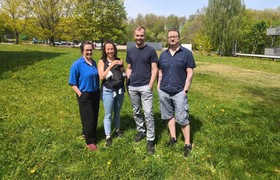
Mit Ultraschall zur hochwertigen Abbildung: Neues Startup-Projekt UltraFocus entwickelt Software für Bauwerksprüfung
Ob alternde Brücken oder marode Gebäude: Ultraschallmessungen können bei der Sicherheitsprüfung von großen Bauwerken auf Defekte, Schwachstellen und Risse hinweisen. A und O für die fachliche Bewertung der Integrität ist jedoch die computerbasierte Abbildung dieser Messergebnisse. In der Geophysik können solche Visualisierungen schon heute schnell und qualitativ hochwertig berechnet werden. Ein neues Startup-Projekt der TU Bergakademie Freiberg hat sich nun vorgenommen, die Lösungen aus der Geophysik erstmals auf die Bauwerksprüfung anzuwenden.
Weiterlesen...
3. Juni 2026
| Universität
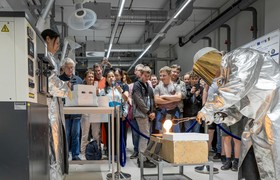
NdWW 2026 mit noch mehr Angeboten für Jugendliche
Bei der Nacht der Wissenschaft und Wirtschaft (NdWW) bieten Universität und Stadt ein buntes Programm für die ganze Familie. Am Standort der Wissenschaft auf dem Unicampus Nord rund um die Agricola- und Lampadiusstraße stellt die TU Bergakademie Freiberg in diesem Jahr Studieninteressierte in den Mittelpunkt und bietet 2026 noch mehr Angebote für Jugendliche.
Weiterlesen...
13. Mai 2026
| Universität
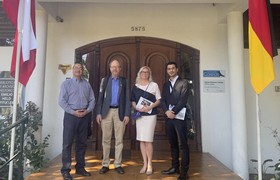
TUBAF vertieft Kooperation mit chilenischen Universitäten
Mehr Doppelpromotionen, neue Austauschprogramme für Master- und Diplom, bessere Deutsch-Vorbereitung: Damit noch mehr Promovierende und Studierende von den Kooperationen der TUBAF mit chilenischen Universitäten profitieren können, sollen sie ausgeweitet werden. Aktuell studieren und promovieren vierzehn junge Menschen aus Chile an der Freiberger Universität im Rahmen der bestehenden Kooperationen mit der Universidad de Santiago de Chile, der Universidad Católica del Norte, der Universidad de Atacama sowie der Universidad de Concepción und der Universidad de Magallanes.
Weiterlesen...
4. Mai 2026
| Forschung
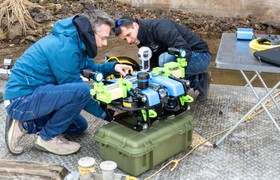
Mit Robotik an die Staumauer – Scientific Diving Center und Institut für Informatik entwickeln Tauchroboter für kritische Infrastruktur
Das Scientific Diving Center (SDC) der TU Bergakademie Freiberg bildet nicht nur den akademischen Tauchnachwuchs aus. Gemeinsam mit dem Institut für Informatik hat das SDC jetzt ein Tool entwickelt, das in Zukunft für die kritische Infrastruktur eine entscheidende Rolle spielen wird. Es geht um einen Tauchroboter, der die Sicherheit von Staumauern dort untersucht, wo Technik bislang nur schwer hinkommt: unter Wasser. Auf der aktuell laufenden Messe IFAT in München stellen die Forschenden jetzt ihr Projekt „SUBmarIne“ zur Bauwerksinspektion unter Wasser vor. Erprobt hat das Team den Tauchroboter an Talsperren – dort, wo er zukünftig zum Einsatz kommt.
Weiterlesen...
21. April 2026
| Forschung
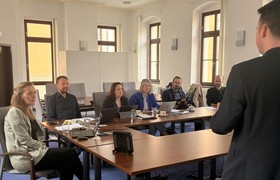
Dämmstoffe, Lieferroboter, Batterie-Recycling & Zahndiagnostik: TUBAF Innovation Fonds fördert 5 Projekte
Forschungsergebnisse mit klarer Transfer-Perspektive weiterentwickeln und die Grundlage für konkrete Verwertungsschritte schaffen: Fünf neue Projekte gehen mit dem TUBAF Innovation Fonds (TIF) den nächsten Schritt in die Anwendung. Für bis zu zwölf Monate werden die Forschenden mit jeweils maximal 90.000 Euro auf diesem Weg unterstützt.
Weiterlesen...
17. April 2026
| Forschung
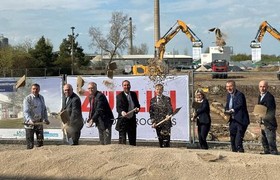
Neue TUBAF-Außenstelle – Spatenstich für Glaskompetenzzentrum Torgau
Auftakt zu einem neuen Kompetenzzentrum für klimafreundliche Glasherstellung: Am Donnerstag (16.4.) hat die Rektorin der TU Bergakademie Freiberg Professorin Jutta Emes gemeinsam mit Sachsens Ministerpräsident Michael Kretschmer und Nordsachsens Landrat Kai Emanuel den symbolischen ersten Spatenstich für den Bau des Glaskompetenzzentrum Torgau vollzogen. Der 5.300 Quadratmeter große Hallenkomplex wird durch einen Versuchsofen der TU Bergakademie Freiberg zu einem Kompetenzzentrum für Glasherstellung – in enger Verzahnung mit Handwerk, Industrie und regionalen Partnern. Schon im Studium können Studierende an der Pilotanlage selbst Versuche durchführen und von der Kooperation profitieren.
Weiterlesen...
8. April 2026
| Universität
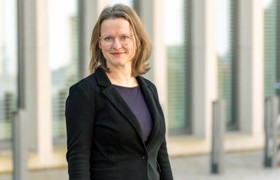
„Stärken besser sichtbar machen“: Neue Dezernentin für Kommunikation
Claudia Kallmeier ist seit 1. April 2026 neue Dezernentin Universitätskommunikation (D5). Sie folgt damit auf Dr. Sabine Schellbach. Expertise für die vielfältigen Aufgaben der Universitätskommunikation bringt die Diplom-Journalistin u.a. aus der Pressestelle der TU Dresden mit. Aber auch an der TUBAF konnte sie schon Erfahrungen sammeln.
Weiterlesen...
3. April 2026
| Alumni
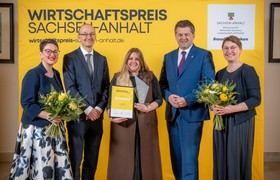
TUBAF-Start-up CYNiO erhält Wirtschaftspreis Sachsen-Anhalt
Ein großer Erfolg für das Spin-off der TU Bergakademie Freiberg: Die CYNiO GmbH mit Sitz in Bitterfeld-Wolfen wurde mit dem Wirtschaftspreis Sachsen-Anhalt 2026 in der Kategorie „Existenzgründung“ ausgezeichnet. Damit würdigt das Land ein junges Unternehmen, das wissenschaftliche Exzellenz mit unternehmerischem Mut verbindet.
Weiterlesen...
30. März 2026
| Universität
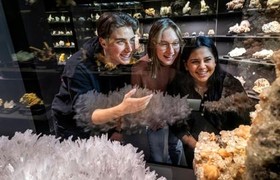
Neues Kombi-Ticket für geowissenschaftliche Sammlungen und terra mineralia
Seit Dienstag, 31.03.2026, bietet die terra mineralia, die Mineraliensammlung der TU Bergakademie Freiberg, ein neues Marketing-Ticket: Bei einem in der terra mineralia erworbenen Kombiticket für die terra mineralia und das Krügerhaus fällt in den geowissenschaftlichen Sammlungen der ermäßigte Eintrittspreis an. Nach der Ausstellung des Ticket haben Besucherinnen und Besucher zwei ganze Werktage Zeit, um alle Sammlungen zu besichtigen.
Weiterlesen...
23. März 2026
| Universität
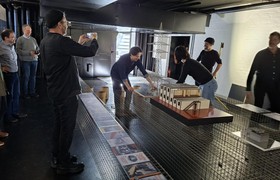
100 Jahre Bauhaus Dessau mit Leih-Objekten der TUBAF
Die glatten, sauberen Oberflächen von Stahlrohren und Glasfassaden stehen für das Neue Bauen der Epoche des Bauhaus in den 1920er Jahren. Eine Sonderausstellung anlässlich des 100-jährigen Bestehens des Bauhausgebäudes in Dessau erzählt die Geschichte der neuen Materialien – unter anderem mit Exponaten aus den Sammlungen der TU Bergakademie Freiberg.
Weiterlesen...